
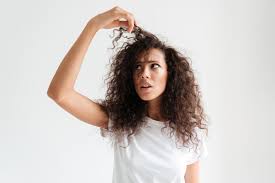
You know that moment when you step out of the house thinking your hair looks decent and then one gust of wind turns it into a fluffy cloud of chaos? You keep running your fingers through it, tying it, untying it, hoping it’ll somehow behave, but it just gets worse. That’s frizz.
The kind that laughs at your expensive conditioners and mocks your straightener. I used to call mine a “mood swing on my head.” But one random Sunday, while scrolling through DIY hacks and sipping coffee, I stumbled upon something so simple, it almost sounded fake a DIY hair mask for frizzy hair made from kitchen ingredients. I tried it just to prove it wrong… and ended up proving myself wrong instead. That one bowl changed my entire hair story.
Understanding Why Frizz Happens
Let’s be honest, frizz isn’t just “bad hair.” It’s your hair’s way of screaming for moisture. When the outer layer of your hair, called the cuticle, gets damaged or dry, it lifts and lets moisture from the air sneak in. That’s when your hair starts expanding, puffing up, and doing whatever it wants. The more you try to brush it down, the worse it gets. And if you use too much heat or harsh shampoo, you’re basically feeding the fire. So no, your frizz isn’t bad behaviour. It’s just your hair asking for a little kindness. For more hair care tips go to skinnwellness.in
Why Natural Remedies Work Better
Here’s something nobody tells you: most commercial anti-frizz products don’t actually heal your hair, they just coat it with silicone to make it look smooth. It’s a quick fix, not real nourishment. But when you use a DIY hair mask for frizzy hair, you’re giving your strands food—real, natural ingredients that penetrate deep, repair, and restore from within. You don’t need to spend thousands when your kitchen has more power than any product shelf. I learned that the hard way, after wasting money on “miracle” bottles that lasted one wash.
By the way, if you’re into self-care at home, you can check out my post on my homemade scalp scrub, it pairs perfectly with this routine and helps boost growth naturally.
My Turning-Point Moment
I still remember that Sunday afternoon when my grandmother looked at me struggling with my tangled hair and said, “You treat your hair like an enemy, not a friend.” That hit hard. So she made me sit down and handed me a mix of coconut oil, curd, and aloe vera. I rolled my eyes but tried it anyway. That night, when I ran my fingers through my hair, I felt something I hadn’t felt in years softness. That was my turning point. Since then, every Sunday became a little hair ritual. That’s how I discovered the most soothing DIY hair mask for frizzy hair I’ve ever tried.
The Science Behind Hair Masks
Think of your hair like a plant. It needs moisture, protein, and nourishment from the roots. A good hair mask works like compost for your hair-rich, healing, and natural. The key is balance. Too much oil can make it greasy. Too much protein can make it brittle. The perfect hair mask blends moisture, oil, and protein in harmony. Once I learned this formula, my hair transformed from dry and lifeless to soft and shiny without needing salon visits.
The Game-Changing Ingredients
Every great hair mask starts with understanding what each ingredient does.
Aloe vera is pure magic; it hydrates without making your hair sticky and calms the scalp.
Curd or yogurt adds protein and shine while reducing dryness.
Coconut oil is the deep healer that penetrates the hair shaft and repairs from the inside.
Honey adds that natural gloss and traps moisture.
A few drops of argan or olive oil? They seal everything in and give your hair that post-salon glow.
These aren’t random items- they’re your hair’s best friends hiding in your fridge.
My Personal DIY Hair Mask for Frizzy Hair
Here’s my holy grail mix. Take two tablespoons of aloe vera gel, one tablespoon of coconut oil, one tablespoon of curd, and half a spoon of honey. Mix until smooth and creamy. If your hair is extra dry, add a few drops of argan oil. Apply from roots to ends on slightly damp hair. Tie it up, wrap a warm towel around, and just relax for half an hour. Rinse it off with a mild shampoo. You’ll know it worked the second your hair starts air-drying it will feel softer, lighter, and less rebellious. That’s the power of something simple yet balanced.
The Step-by-Step Process That Actually Works
Start by brushing your hair gently to remove tangles. Divide your hair into sections for even application. Apply the mask slowly, making sure every strand gets attention. Massage your scalp in small circles to improve blood flow. Cover your hair with a warm towel or shower cap, warmth helps the mask penetrate deeper. After 30 minutes, rinse with lukewarm water, not hot. Pat dry with a soft towel. Skip conditioner because your mask already did the job. This step-by-step process might sound simple, but it’s pure magic when done mindfully.
Common Mistakes People Make
One of the biggest mistakes people make with any DIY hair mask for frizzy hair is impatience. They apply it and rinse it off in ten minutes. Give it time. Hair needs to soak in nutrients. Another mistake is using hot water, which opens up the hair cuticle too much and removes the mask’s moisture benefits. And please, don’t overload the mix with honey or oil, your hair should feel hydrated, not heavy.
How Often to Use It for Best Results
Once a week is ideal if your hair is moderately frizzy. Twice a week if it’s extremely dry or chemically treated. Don’t overdo it because even natural ingredients can overwhelm your scalp. Consistency matters more than frequency. Give it time to work you’ll notice visible changes after the third week of regular use.
The Post-Mask Routine That Locks in Smoothness
After washing, never rub your hair with a towel. Use a microfiber towel or a soft cotton-t-shirt instead. Add a few drops of argan oil or aloe gel as a leave-in serum on damp hair. Avoid blow-drying—let it air dry naturally. And if you really want long-term shine, sleep on a satin pillowcase. These tiny tweaks make a big difference in keeping your DIY hair mask for frizzy hair results lasting longer.
How to Make a Mini Hair Spa at Home
You don’t need a salon to pamper yourself. Create a little ritual. Light a candle, put on your favourite playlist, and give yourself thirty minutes of peace. Wrap your towel, sip some herbal tea, and just breathe. Self-care doesn’t have to be fancy. It’s about showing up for yourself, even if it’s just through a bowl of curd and aloe vera.
Bonus DIY Masks You’ll Want to Try Next
If your hair likes variety, you can try these combinations too.
For extreme dryness, mash half an avocado with olive oil and honey—it feels luxurious.
For dull hair, blend banana with yogurt and coconut milk, instant shine.
For damaged ends, mix egg white with olive oil- protein power..
Each of these masks gives your hair a different kind of love, and it’s fun to discover what your hair responds to best.
What I Learned from Months of Experiments
Over time, I realised that frizz wasn’t the enemy, neglect was. When I started treating my hair with patience instead of products, it became calmer, smoother, and much more manageable. It’s funny how hair mirrors our emotional state sometimes. Stress shows up in strands, too. My DIY hair mask for frizzy hair routine isn’t just about fixing texture. It’s my little self-care therapy every Sunday.
Why Self-Care Through Hair Care Matters
Hair care is more than vanity. It’s one of those quiet moments where you connect with yourself. When you mix ingredients, apply them, wait, and rinse you’re practicing mindfulness without even realising it. It’s a reminder that good things take time… including your hair’s healing process. Taking care of yourself is not an indulgence; it’s maintenance for your soul.
FAQs
1. How often should I use a DIY hair mask for frizzy hair?
The general recommendation is once a week for moderately frizzy hair. If your hair is very dry or colour-treated, you could do it twice a week initially, then switch to once a week for maintenance. moxiebeauty.in+1
2. Can I leave a DIY hair mask for frizzy hair on overnight?
While the idea sounds tempting, leaving most DIY masks on overnight isn’t recommended because oils and proteins can build up and make your hair heavy or greasy. For best results, 20-30 minutes is usually enough.
3. Will a DIY hair mask for frizzy hair work on all hair types (curly, coloured, coarse)?
Yes! DIY hair masks can work for all hair types—as long as you tailor the ingredients to your needs. Curly or colour-treated hair might benefit from richer oils and more frequent masks. BeBeautiful+1
4. What ingredients should I avoid in my DIY hair mask for frizzy hair?
Avoid overly acidic ingredients like lemon or apple cider vinegar if your hair is already dry or damaged, as these can open the hair cuticle and make frizz worse. Too much protein too often can also make hair stiff. Cultivator Shop India
5. How soon will I see visible results from a DIY hair mask for frizzy hair?
You’ll likely notice smoother texture and less puffiness after the first use. But for lasting changes—improved shine, reduced breakage—you’ll see the difference after 3-4 consistent weekly uses. moxiebeauty.in+1
At the end of the day, perfect hair isn’t about perfection, it’s about care. My journey with frizz taught me patience, creativity, and consistency. The best part is, you don’t need expensive brands or salon appointments to love your hair. You just need five simple ingredients and thirty peaceful minutes. So next time you catch yourself complaining about your frizz, head to your kitchen instead. Mix a little love, apply it gently, and let your hair rest… because beautiful things happen when you care for yourself from root to tip.
If you try this DIY hair mask for frizzy hair, tell me how it feels. I promise… it’ll change the way you look at your “bad hair days” forever.